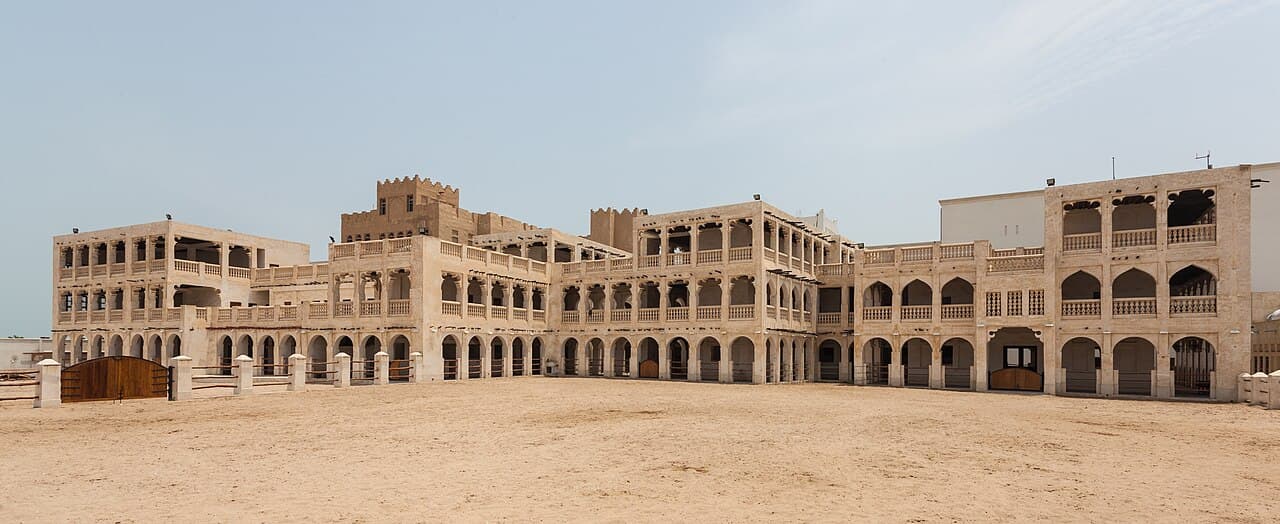
Keep the National Museum, Museum of Islamic Art, Mina District and Souq Waqif in one geographic story rather than crossing the city repeatedly.
Begin with one museum, not both. The National Museum frames Qatar through its land, people and modern state; the Museum of Islamic Art provides a collection-led route across centuries and regions. Giving either institution proper time creates a stronger day than rushing their headline galleries.
Continue outdoors only when conditions suit the group. The Corniche, dhow harbour and Mina District explain Doha's relationship with the water, while Msheireb and Souq Waqif bring the route back to living streets, food and evening activity. Check museum admission, prayer-time access and exhibitions on the official pages before leaving.
Route checklist
Start indoors at one major museum
Walk the port or Corniche when heat permits
Reach Souq Waqif and Msheireb for the evening
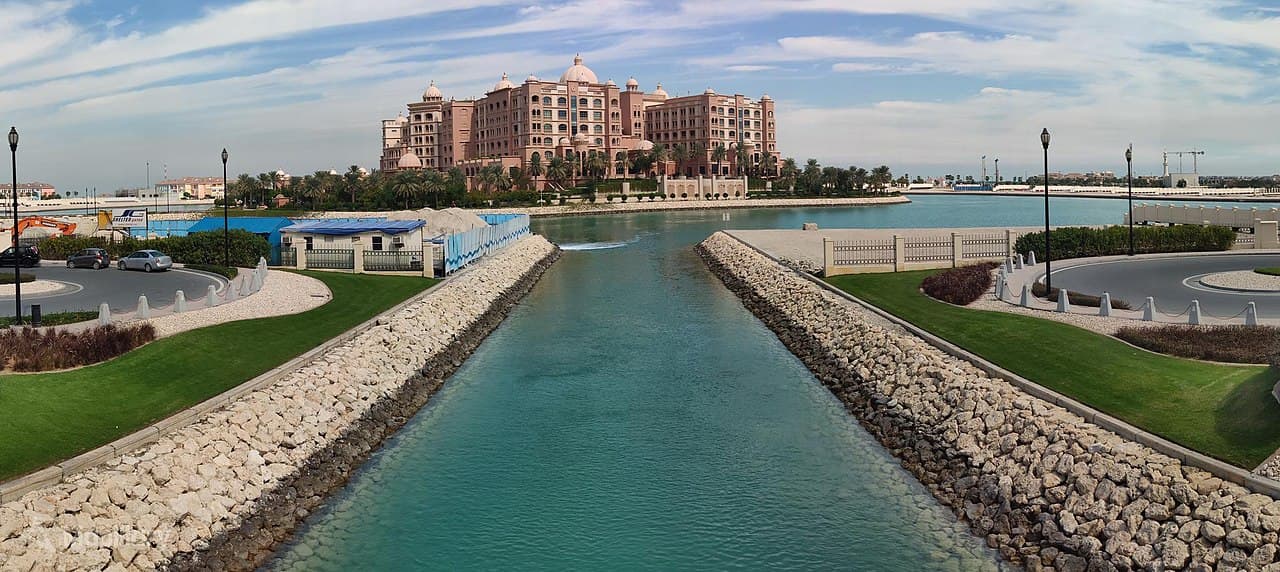
The Pearl Qatar · km2bp @ Mapillary.com · CC BY-SA 4.0
Guide 02
A waterfront-to-Katara route
Use the Corniche as a visual introduction, then continue north toward Katara and The Pearl for culture, public art and a slower marina walk.
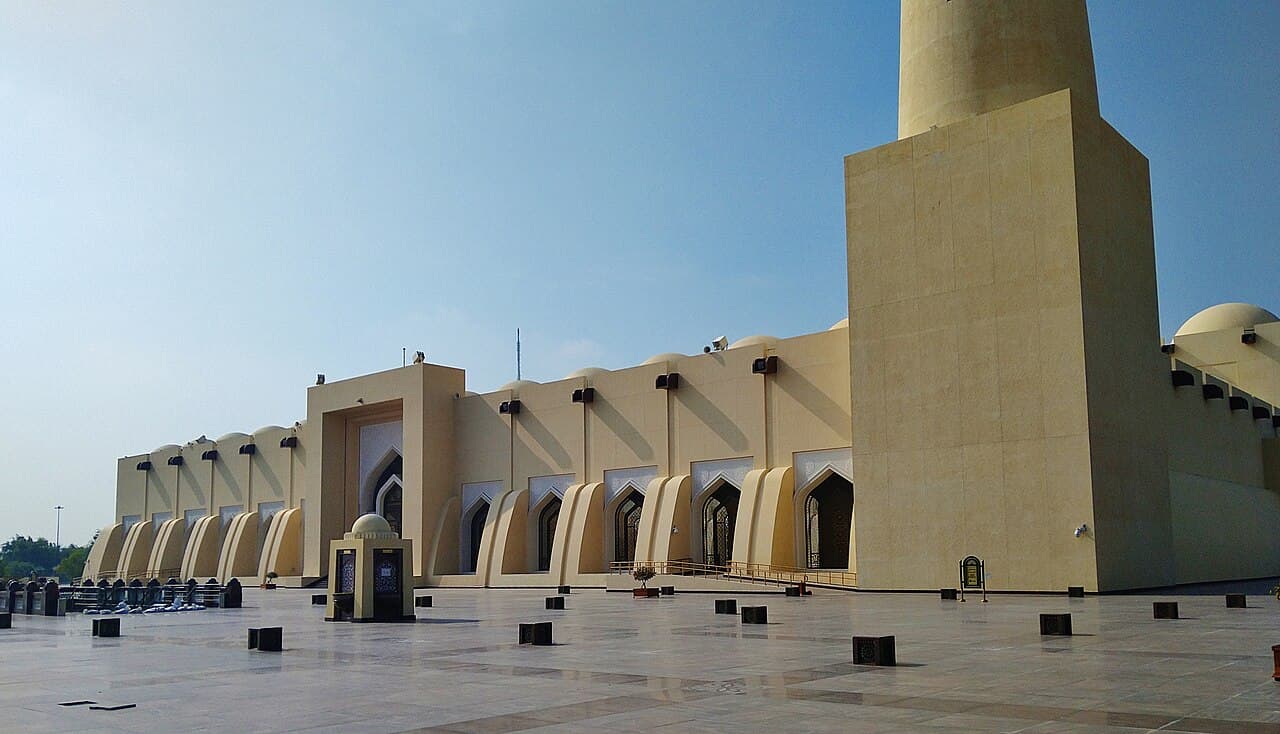
Treat this as a sequence of distinct waterfront districts rather than one continuous walk. The Corniche gives the broad city view; Katara is the cultural stop, with galleries, performance spaces, the mosque and beach; The Pearl is best used for a measured marina or public-realm walk rather than as a substitute for heritage Doha.
Metro can cover the long north-south movement, but the final distance between a station and a specific venue still matters. Build in shade, water and a clear return plan. Katara's programme changes throughout the year, so use its official calendar instead of relying on an old event listing.
Route checklist
Check weather and outdoor-event notices
Choose Katara before The Pearl
Allow extra time for metro and last-mile transfers
Imam Muhammad ibn Abd al-Wahhab Mosque · Zairon · CC BY 4.0
Guide 03
Doha after sunset
The city is most comfortable and expressive after dark. Pair Msheireb's shaded streets with Souq Waqif, then add a skyline stop rather than another indoor attraction.
Start in Msheireb so the transition from contemporary urban design to Souq Waqif feels deliberate. Walk slowly, notice courtyards and restored buildings, and keep active religious and family spaces free from intrusive photography. Dinner works better as the centre of the evening than as a rushed final task.
Add only one skyline viewpoint afterwards: the Corniche, the harbour edge or a north-facing waterfront stop. Event nights can alter traffic and station patterns, while restaurant and shop hours can change. Confirm the last practical journey before sitting down, especially when travelling with children or anyone who needs shorter walking stages.
Route checklist
Begin around golden hour
Respect prayer times and active worship spaces
Confirm late transport before settling into dinner
Official planning desk
Verify the details at source.
Opening hours, exhibitions and public-space access change. These are the authoritative starting points.