A heat-smart family day in Doha uses contrast: one indoor place with a strong purpose, one quiet reset, and one outdoor segment that can shrink or disappear. The aim is not to keep children constantly entertained. It is to alternate kinds of attention so that a museum, library or park remains enjoyable instead of becoming another demand.
This plan avoids claims about universal age access, family carriages, fixed hours or guaranteed activities. Children differ, exhibits change and outdoor conditions can make yesterday's sensible route unsuitable today. Check the official venue and transport pages, then let the youngest or least heat-tolerant traveller set the length of exposed sections.
At a glance
Start here
- Choose one indoor anchor that matches the child's actual interests.
- Use a library, café pause or quiet gallery as a reset rather than another attraction.
- Make the outdoor block optional and evaluate conditions on the day.
- Carry a simple exit plan for overstimulation, fatigue or a closed activity.
01
Plan an energy budget before a timetable
Divide the day into demanding, restorative and flexible blocks. A large museum is demanding even when it is air-conditioned; children still navigate sound, scale, rules and unfamiliar stories. A library corner or unhurried meal can be restorative. A park is flexible only when the weather and the group's energy make it genuinely pleasant.
Choose the exit trigger in advance. It might be the end of one gallery theme, a specific sign of fatigue or a family-agreed break after a set period. The number is not the important part; the shared rule is. It prevents adults from defending a sunk-cost itinerary after the children have stopped engaging.
- Demanding block: museum galleries or a long cross-city transfer.
- Restorative block: reading, food, drawing or quiet observation.
- Flexible block: park, waterfront or extra gallery that can be dropped.
02
Pick NMoQ for story and senses
The National Museum of Qatar suits a family curious about animals, landscape, objects and the story of the country. Its immersive displays connect environment, heritage and modern life through large-scale audiovisual presentation and historic material. The building itself surrounds a historic palace, giving children a visible old-and-new contrast before any label is read.
Give the visit a search question: find evidence of sea life, notice how homes respond to place, or trace one material through time. A question turns a large museum into a manageable investigation. It also allows the family to stop after finding a satisfying answer rather than treating completion of every gallery as success.
Sources: Visit Qatar03
Pick 3-2-1 for movement and sport
3-2-1 is a better anchor when sport, competition or physical participation will hold the group's attention. Across seven spaces, the sequence starts with global sporting history and the Olympic Games, then turns to athletes, Qatar's role as a host, local sporting culture and an Activation Zone. The range lets adults follow cultural history while children look for familiar games and athletes.
Do not promise that every interactive will be available. Identify a gallery story that works without it, then treat participation as a bonus confirmed at the venue. A useful family split is one object-focused section, one athlete story and the final active area, with a break between the reading and movement modes.
Sources: 3-2-1 Qatar Olympic and Sports Museum04
Use QNL as a real destination, not a waiting room
Qatar National Library's Children's and Young Adults' Library invites children with parents, caregivers and teachers to explore its spaces and collections. The Children's Library holds more than 100,000 books and provides educational toys, online resources and a programme that can include story time, creative work, early literacy, science, arts and theatre.
The collection is the dependable reason to visit; a particular programme is not. Check the current calendar if an activity matters, but build the reset around browsing, choosing a book and letting everyone lower their pace. QNL works especially well in an Education City day because it changes the family dynamic from consuming attractions to making choices together.
- Let each child choose one shelf or subject to explore.
- Treat scheduled activities as confirmed extras, not assumptions.
- Use the quieter pace to decide whether the outdoor block still fits.
05
Make the park conditional
Qatar Museums identifies MIA Park and the park at NMoQ as places combining open space with art and play features. Oxygen Park in Education City adds trails, gardens, picnic areas, sports spaces and varied topography. These are meaningful destinations, but none should be treated as an all-weather promise simply because a map shows greenery.
Evaluate the outdoor block immediately before using it. Consider sun, wind, humidity, shade on the exact route and how the family feels after the indoor anchor. If conditions are poor, look at the park from a sheltered edge or remove it. The day remains complete because the park was designed as an option, not the proof that the itinerary worked.
Sources: Qatar Museums; Visit Qatar06
Choose one of two day shapes
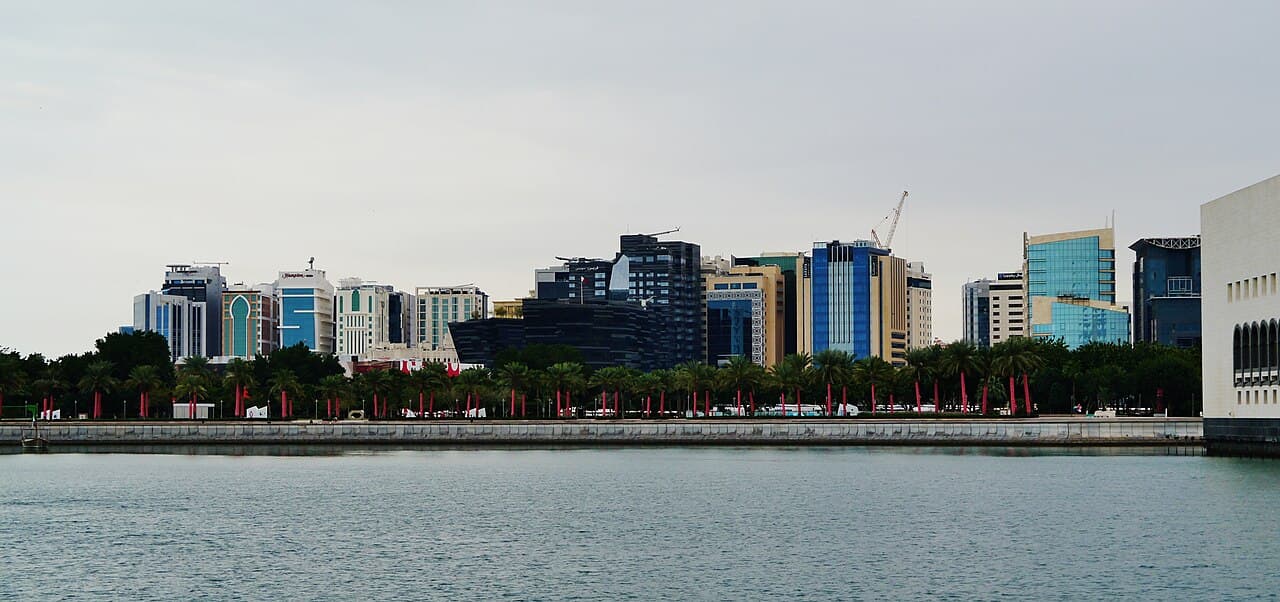
For a central Doha day, anchor at NMoQ, pause for food or quiet drawing, then consider the museum park or a short waterfront look. Do not add Souq Waqif automatically; it changes both the sensory load and the return journey. For an Education City day, combine QNL with Oxygen Park only if current conditions support the outdoor segment.
A sports-focused alternative anchors at 3-2-1 and ends after the museum unless the family actively asks for more. This is not under-planning. It preserves time for the Activation Zone or an unexpected gallery interest and prevents a successful museum visit from being judged by whether another distant stop was completed.
- Central story day: NMoQ, reset, optional museum park.
- Education City day: QNL, reading pause, optional Oxygen Park.
- Sport day: 3-2-1 as the full anchor, with no compulsory add-on.
07
Verify the details that affect your children
Official tourism pages collect family ideas, but the venue must answer the specific question: current opening, booking, age or height limits, stroller policy, sensory support, food rules and whether a named play element is available. Do not convert a general family label into a guarantee that every child can enter or enjoy every activity.
Share the plan in simple terms before leaving: one main place, one rest and one maybe. Pack only what the venues permit, keep the next indoor refuge saved, and agree which adult handles tickets or directions while the other attends to the children. Good family logistics should be almost invisible once the day begins.
Sources: Visit QatarUseful answers
Reader questions
Which Doha museum works best for an active child?
3-2-1 may be the strongest fit because its galleries cover global and Qatari sport and end with an Activation Zone. Confirm current access to interactive elements and keep one non-interactive gallery story as the core plan.
Sources: 3-2-1 Qatar Olympic and Sports MuseumCan families visit Qatar National Library?
QNL explicitly invites children with parents, caregivers and teachers to its Children's and Young Adults' Library. Its collection and learning space are the reliable draw; check the live calendar for any programme you hope to attend.
Sources: Qatar National LibraryShould I include an outdoor park in hot weather?
Only as a conditional block. Check current conditions and the exact amount of shade or exposed walking, then let the least heat-tolerant family member decide. A museum-and-library day is complete without a park.
Sources: Qatar Museums; Visit QatarIs every attraction described as family-friendly suitable for every age?
No. Family-oriented is a broad description, not an access promise. Ask the venue about current age, height, supervision, stroller and sensory arrangements that matter to your group.
Sources:Read the evidence
Sources and further reading
These sources support the relevant sections above. Plans and comparisons are editorial suggestions. Check operators for current arrangements.
- National Museum of Qatar (NMoQ) | Visit Qatar ↗Visit Qatar · Accessed 14 September 2026
NMoQ's immersive national narrative, historic palace and sensory presentation.
- About the Galleries - 321 Sports Museum ↗3-2-1 Qatar Olympic and Sports Museum · Accessed 14 September 2026
The seven gallery spaces, sports-history themes and Activation Zone.
- Explore the Children's Library | Qatar National Library ↗Qatar National Library · Accessed 14 September 2026
The Children's Library audience, collection size, resources and programme types.
- Parks and Playgrounds - Qatar Museums ↗Qatar Museums · Accessed 14 September 2026
MIA Park and the park at NMoQ as museum-linked outdoor spaces with art and play.
- Oxygen Park Doha | Visit Qatar ↗Visit Qatar · Accessed 14 September 2026
Oxygen Park's location, trails, gardens, picnic areas, sports spaces and topography.
- Popular activities with kids | Visit Qatar ↗Visit Qatar · Accessed 14 September 2026
The range of museum, outdoor and indoor family activities in the official overview.